
Creative Writing

In Defense of the Passive Voice

Here’s how my current favorite style manual, The Little, Brown Handbook, defines passive voice:

“The passive voice of the verb indicates that the subject receives the action of the verb. Create the passive voice with beamisarewas,werebeing, or been followed by the main verb’s participle.”

It gives this example: “Her latest book was completed in four months.”

The main point to take from that definition is that “the subject receives the action of the verb,” as opposed to the subject performing the action. To make the above example active, you would write it like this: “She completed her latest book in four months.”

Seems pretty straight forward, right?

Apparently not. I regularly run into writers who work from the assumption that any use of a “to be” verb constitutes the passive voice. This is not true! (See? That last sentence was active even though I used “is.”)

I offer this post in defense of the passive voice. Not only is it frequently misunderstood, it’s not always the wrong choice to make as a writer. Don’t get me wrong, I’m not saying it should be your “go to” sentence structure. But sometimes it makes sense to use it.

For example, I once worked with a novelist who was revising a first person POV YA sci-fi thriller. He tended to overuse the passive voice, constantly describing things that happened to his hero until the manuscript read like a journal of events the narrator simply witnessed. We worked a long time on rooting out all that passive voice and making his hero into the prime mover of his novel. But he had a chapter where his protagonist fell into the clutches of an antagonist with mind control powers. So I encouraged the author to go crazy with the passive voice in that part. It made sense, because his hero had lost all agency. The passive voice captured his protagonist’s predicament perfectly because he had become, quite literally, the puppet of the antagonist.

So, don’t fear the passive voice. Just make sure you use it deliberately. Like any grammatical construct, it deserves its place in your writer’s toolbox. But, like any tool, it can be dangerous if you don’t understand what it is or how it works.

Training Your Brain to Self Edit

The brain is a funny thing. It’s brilliant when its creating, conjuring up amazing ideas and stories out of nothing. But sometimes the brain can be too brilliant.

When we write, our brains know what we’re trying to put down on paper faster than our fingers can keep up. This game of catch-up often leads to mistakes, typos, words missing letters, sentences missing words. Of course, spell check will help with these. But what about that pesky problem in the English language of words that sound the same but are spelled differently? Our brain is our best tool to catch those, but here’s where the too brilliant part comes in: Our brain corrects those mistakes without making us aware of it.

It’s like those games where you can read a sentence even if words are backward. The brain is looking for meaning, not grammar, and as long as it can get the meaning, it doesn’t worry about anything else. And if you wrote those words, with their mistakes, the brain already knows the meaning.

So, how to find and fix the problems? You need to trick your brain into seeing your words as if for the first time. There are lots of methods:

• Print out the pages and read on paper. Seeing the words in a different medium can jog your brain to concentrate more on the details.

• Change the font or color of the words on the screen. This can push your brain to think that what you’re reading is new.

• Read out loud. This is my personal favorite. By forcing your mouth to actually say every word on the page, you’re forcing your brain to read every word.

Next time you’re editing your own work, try these tricks to find and fix more errors.

Yellow Bird Editor Samantha Clark also blogs at SamanthaClark.wordpress.com.

Pixar’s Rules of Storytelling

It’s hard to argue the fact that the folks at Pixar know how to tell a good story. Here are some storytelling rules-of-thumb that they have been kind enough to share online:

Pixar’s 22 Rules of Storytelling

Don’t worry if you’re not a screenwriter; there’s something here for every kind of storyteller. Our current favorite is number two:

“You gotta keep in mind what’s interesting to you as an audience, not what’s fun to do as a writer. They can be very different.”

Which one speaks to you? Post a comment with your favorite and a little explanation about why.

Looking for a middle grade book topic? Project Middle Grade Mayhem has the answer

http://project-middle-grade-mayhem.blogspot.com/2013/05/what-do-middle-schoolers-really-want-to.html?showComment=1368466626882#c7089129283011236009

Are you trying to figure out what your next middle grade book should be about? Here’s a link to a great interview with a middle school librarian in Ohio with some interesting insights into the pre-teen/tween mind. One of my critique partners discovered the Project Middle Grade Mayhem blog and guided me to this interview. Even if, like me, you’re not a middle grade writer, you’ll probably find something interesting and educational on their website. Their archive goes back three years and the topics range from interviews to book reviews to discussions on writing craft.

And, if you are a middle grade writer, then you might be interested in applying to join the Mayhem team. They’re taking applications for two new members until November. Here’s the link to the application page:

http://project-middle-grade-mayhem.blogspot.com/p/apply.html

Good luck!


Sweeping Past Writer’s Block

Stuck? Can’t get past a prickly plot point? Or maybe your hero has gotten everything she wants and it’s only chapter four? Do you have writer’s block?

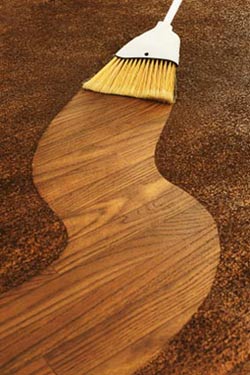
Sweep that Block Away

Sweep that Block Away

Pick up a broom. Dust some shelves. Good chance they’re your books, anyway. Such not-quite-mindless activity is perfect for letting your brain immerse itself in the problem. It gets your hands moving and your eyes watching without really seeing while that pesky plot point problem percolates away inside your head. And the next thing you know, the house is a little cleaner and you’ve come up with a brilliant solution to your dilemma.

Sweeping and dusting are good writer’s block fighting tasks for two non-writing reasons, as well. First, they’re never ending. They always need doing. Around my house we get about a five minute window of hairlessness when the place actually looks clean and shiny (two dogs and a long haired cat). So, no matter how many times you get stuck in a revision, chances are there’s some dusty corner somewhere in your house that you can go after. And, even if it doesn’t really need cleaning, you’re not hurting anything.

Which leads me to the second reason: sweeping and dusting are good because they promote domestic bliss. Instead of bouncing a ball (or your head) against a wall, or simply wandering through the house muttering angry nonsense at your feet – both of which activities can be a bit annoying to the people you live with – incorporating a broom or dust cloth into your writing struggle allows you to be a contributing member of the household, even as you solve your manuscript’s problem. That is satisfying both for you and for that person in your life who loves you and supports but probably entertains regular, secret doubts about having chosen to live with a writer. You know what I mean. I don’t care if you’ve got a roommate or a spouse or something in between, he or she will find you easier to live with as you wade through your seventh revision if he/she sees you carrying a little extra weight around the house. It lends you a noble air: as far as your significant other can tell you’re digging down deep and forcing yourself to help the team, even in the midst of your darkest writerly despair.

Doesn’t that sound good? Doesn’t it sound just like the person you want to be? I know it sounds like who I want to be. And any day now I’m confident that I actually will become that selfless, broom wielding writer. I know I will. Someday soon, instead of munching on candy and staring out the window, I’ll drag myself out of from in front of my computer and pick up that broom, and I’ll sweep all that pet hair right into the same trashcan as my writer’s block. It’ll be glorious and satisfying. And it’ll happen soon. I can feel it stirring inside of me.

But, if you happen to do it first, let me know how it goes.