Success In the Press: Poinsettia Girl by Jennifer Wizbowski

Historical Fiction Company's Award of Excellence

Bronze Award from Yarde Book Reviews

Historical Fiction Company's Award of Excellence ★ Bronze Award from Yarde Book Reviews ★

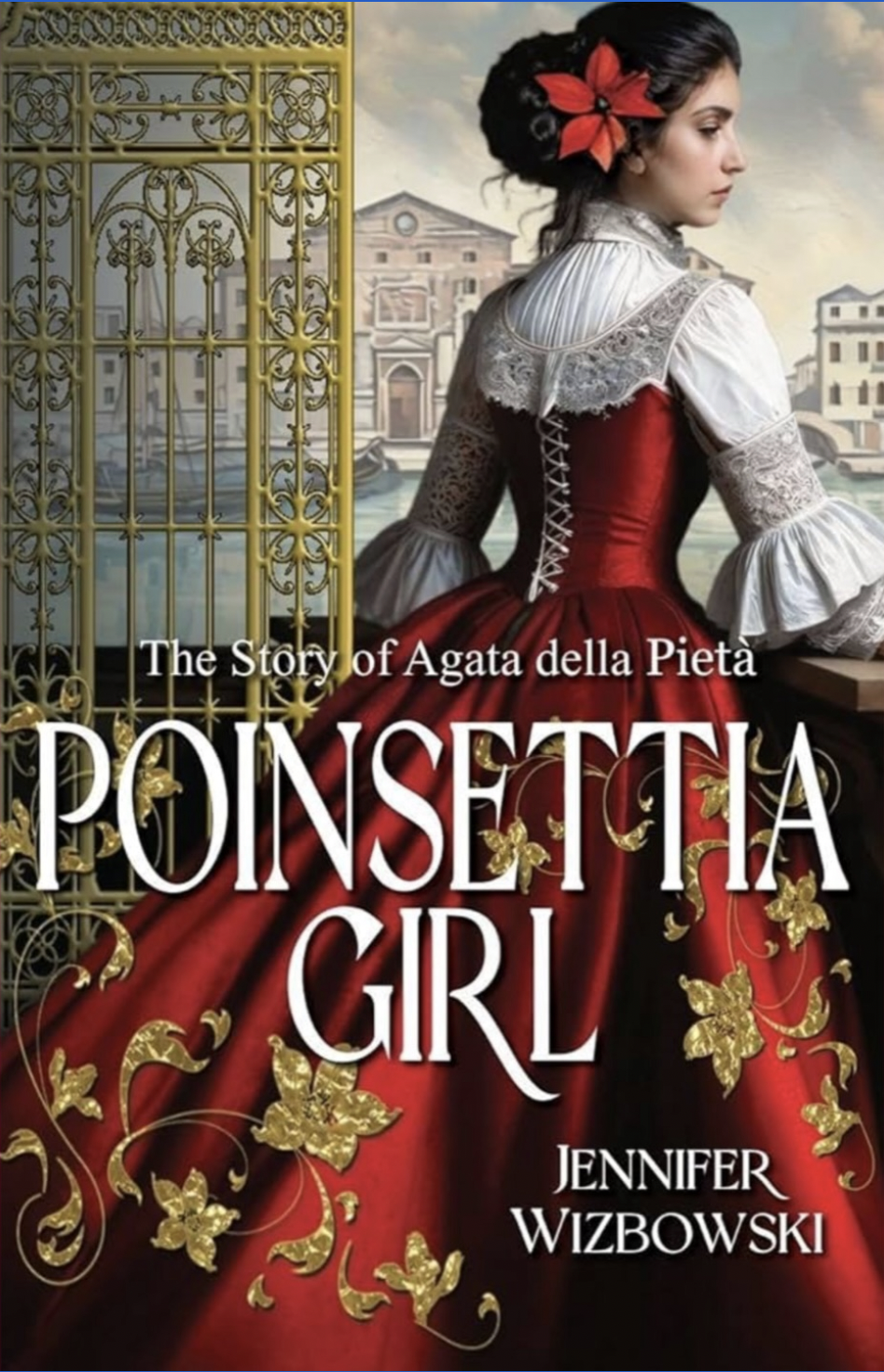
Poinsettia Girl is based on the story of Agata de la Pieta, an orphan musician of the Ospedale de la Pieta. Ten-year-old Agata's world is shaken at the sudden death of her mother. Left only with her egregious father, a working musician in Venice, her ailing grandmother sends her to the well-known orphanage, hidden from everything she's ever known. Agata auditions for the conservatory style music school where music is both salvation and spectacle. Hidden behind ornate metal grates, adorned with poinsettias in their hair, the singers are veiled in mystery, their ethereal music drawing noble audiences, including gilded young men who see them as treasures-not only for their sound but as coveted marriage prizes. Just as she reaches the height of her musical journey, a marriage proposal from someone outside the audience tempts her with the promise of a new life-a return to the old neighborhood she's longed for and a home she barely remembers. Torn between the music that has defined her and the hope of belonging to a family, Agata must confront the most profound question of her life: is her purpose rooted in the music that shaped her, or in the love that might free her?

It is a book that lingers. It is a book that, once opened, seems to breathe. And it is, without hesitation, a book one should read.
— Historical Fiction Company

From BlueInk Review: “Through alternating character viewpoints and third-person narration, Wizbowski's novel thoughtfully explores the challenges of claiming autonomy as a woman in a traditional, male-dominated culture. Agata's steady transformation from a shy foundling to a 22-year-old musician illustrates how trauma can irrevocably shape personal identity. The writing shines when depicting Agata's growing artistry and how music serves as a source of inner strength. Overall, this is a quietly moving journey of rebuilding purpose after surviving personal tragedy. Readers who appreciate women's fiction will feel as protective of Agata as the fictional nuns charged with shepherding her into womanhood.”

From a Reader: “I found this story deeply moving and emotionally immersive. Agata’s inner conflict felt raw and authentic, especially her struggle between staying loyal to the music that saved her and the desire to belong to a family again. The author captures Venice with a soft, almost lyrical touch, and the atmosphere of the orphanage, the performances, and the social limitations placed on these girls felt vivid and heartbreaking. Knowing the story is rooted in real history added another layer of poignancy to every decision Agata faced.”

Amazon | Goodreads | Author Site

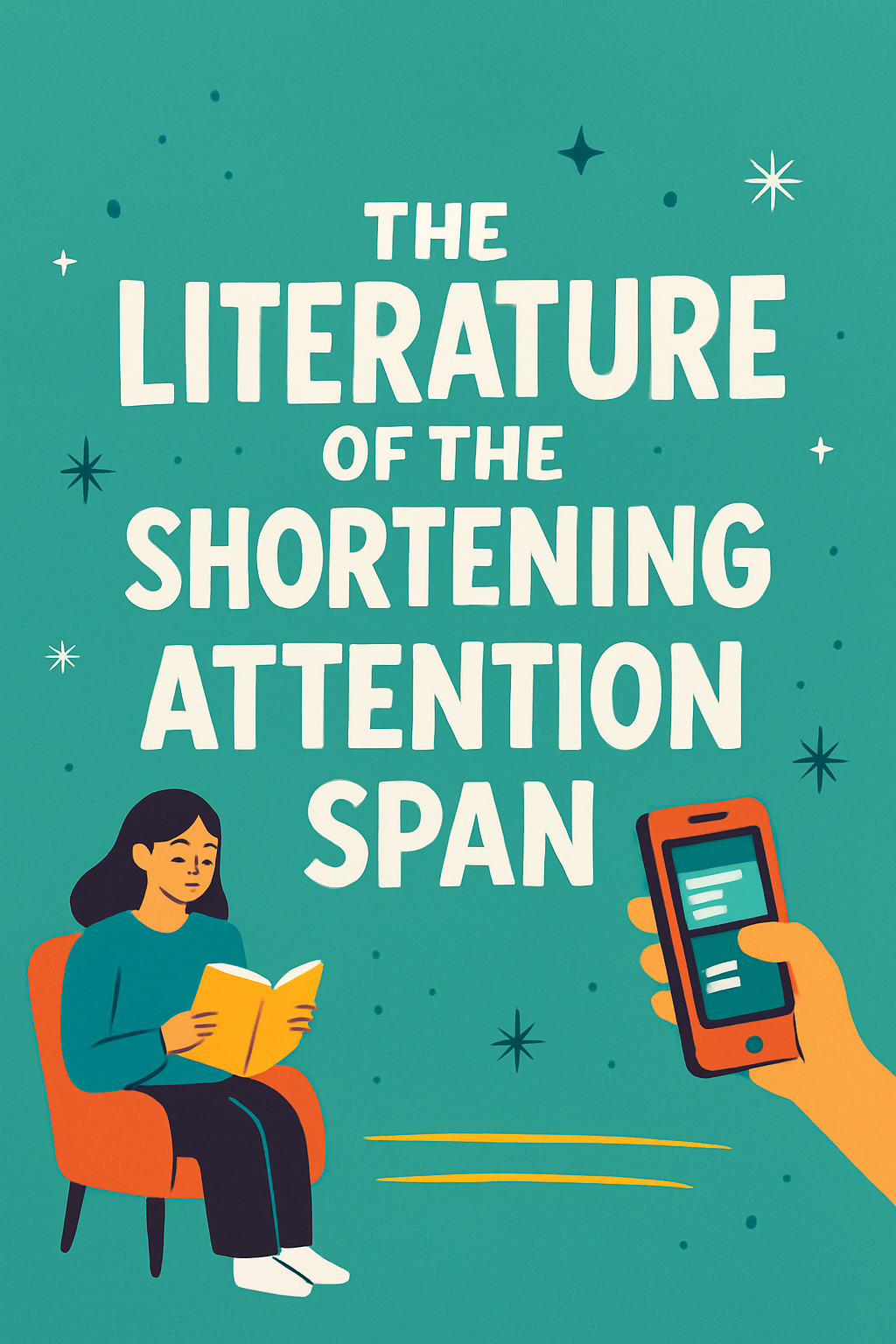
The Shortening Attention Span of Readers: How It’s Re-Shaping the Market

By Molly Pruetz

We live in an age where content competes for our attention in increasingly shortening bursts. In a digital world full of endless scrolling, how is the shortening attention span of readers changing what books are written, published, and read?

In a quiet moment after a long day, reaching for your phone feels so much easier than cracking open a book. Sometimes the last thing I want to do is string two sentences together (the trials of an English student, I suppose), but scrolling through endless short-form video content and social media often leaves my brain feeling like mush. So why not just pick up a book?

Maybe it’s because reading a whole page - even a whole paragraph, at times - feels overwhelming. It requires a skill that we are quickly learning to withhold: our attention. And, when we do have the long-awaited opportunity to pick up a book, we realize we have to work for the dopamine rush that our phones provide with no effort.

All day, our attention is fought for: by our jobs, our homes, our families, our pets…and our phones. We all know how the algorithms work, and we joke about them constantly. Whenever some niche content appears on our screen, chances are the comments will read along the lines of “idk how I ended up here, but I love it” or “the algorithm knows me better than I know myself.”

So, what does this have to do with our desire to read a book?

Simply put, technology (social media, specifically) in our culture has altered our mass reading habits. Are there still people out there who read multiple books weekly? Absolutely! I personally know several. Does it also seem a bit improbable that there is someone out there who finds the time to read multiple books a week? Absolutely.

And why is that?

Because the short form content we love so much is reconditioning our attention span. Nowadays, asking an audience to concentrate on one thing for multiple minutes at a time (forget hours) is a tall order. We’ve slowly conditioned ourselves to receive low-effort, fast-acting dopamine. All we have to do is sit and stare at our phone. (I know I’m guilty of it.)

Our attention span has adapted to a dopamine cycle of instant gratification that prioritizes speed over depth, and I think this has begun to reflect in our literature. Not just in how we read a book, but in what books we are picking off the shelves at Barnes & Noble.

In selecting a piece of fiction, there are two general categories: low-effort and high effort. I asked ChatGPT how it might define the conventions of both low and high effort fiction. Here is what it generated:

Low-effort fiction generally centers on -

  • Simple language (often verging on juvenile)

  • Plot/trope-based storytelling with instant gratification

  • Sex or trauma-forward marketing (‘emotionally devastating’ or ‘spicy’)

  • Fanfiction pacing and structure (alternating POVs, cliffhangers, emotionally unearned arcs)

  • Algorithm appeal (designed to hit niche markets via TikTok aesthetics (‘morally gray man,’ ‘feral girl energy,’ ‘he falls first’).

High effort fiction generally centers on -

  • Dense or complex prose (often more philosophically or emotionally loaded)

  • Thematic or philosophical weight (often no clear resolution, and ambiguity is intentional)

  • Formal Experimentation (structure is nonlinear or fragmented)

  • Slow or Ambiguous Plot (focus is often interiority, not action)

  • Intertexuality/literary References (expects you to recognize, or at least sense, echoes of philosophy, art history, mythology, or other literature)

  • Moral Ambiguity/psychological complexity (you’re not told what to think or feel about characters)

Platforms like TikTok and Youtube are saturated with content that reviews, summarizes, and recommends books (we don’t even have to blind guess anymore, we can just read Goodreads comments). Consumers buy those books. Sales go up. And suddenly, ‘low effort’ content is in the spotlight.

While both categories have their merits, there is one ruling difference: the amount of effort it requires of you—the reader—in order to engage with a text. Low-effort content is easier to read. It feels comforting and predictable because, chances are, you’ve read the same story (with slightly different characters or settings) a hundred times. It’s safe, it’s known, it’s relaxing. This also means it can get boring fast. On the other hand, high-effort content expects something of you. Whether that is pre-existing knowledge (bite the bullet, use a dictionary) or reading to the end of the chapter (I’m looking at you, Zadie Smith), high-effort content respects a reader’s intelligence. It demands reader accountability. It wants you to engage. And in a world where we are used to swiping up the moment we feel dissatisfied, it’s no wonder low-effort content is flying off the shelves.

There has always been a limitless range of subjects and genres to read from, but within the last 5-7 years, the literature market has seen high profitability from ‘low effort’ literature. Why is that? We’ve been through a lot in the last five years alone. We don’t want to dwell on heavy topics that require homework to understand. We want a real break from life. Something easy to pick up and put down, fast-paced, and something that keeps going (stability). We want a low-effort, easy-dopamine ‘pick-me-up,’ sound familiar? (See Sarah J. Maas, Emily Henry.)

Because here’s the larger problem: if we’re continuing to desire increasingly low-effort literature, what does this mean for literature in the long run? Where are the stories that will guide us, teach us, grow us? Storytelling is inseparable to the experience of being human. What happens when we don’t have the time of day for it anymore because we’re chasing a dopamine high?

Don’t get me wrong, I’m not saying there’s anything wrong with picking up a new ‘low-effort’ read, (sometimes that’s just what TikTok ordered), but I do think there is merit in taking on a challenge to read outside of your preferred genre. Even if it takes you forever, you’re feeding your brain by doing something different. Sample the buffet because you can, have fun with it!

So, whether you pick up a cozy fantasy, tumble headfirst through the Library of Babel, ask yourself: why am I reading this? Are you looking to be comforted, challenged, or distracted? (Trust me, the dopamine is sweeter when you earn it.) In a world where attention is our most valuable commodity, our literature is being reshaped by what we’re willing to spend it on. So, every so often, switch it up. There are so many stories out there waiting for you to give them a try.

You are the market, and there is power in what you buy, read, and share. If you want more of a certain kind of story—read it. Talk about it. Post about it. Be vocal. Literature can still stretch us, slow us down, make us think, and help us grow, both as individuals and as a community. But whether you’re reading something ‘low’ or ‘high’ effort, just keep reading!


Success In the Press: The Children of the Children by Robin McMillion

Literary Titan Book Award Winner

Literary Titan Book Award Winner ★

From the Author: Can children born into a cult escape the only world they've ever known?

Danny Calvert thinks part of American society is about to crash and burn. Capitalism, if he's lucky. But when a college friend dies in jail, he joins an apocalyptic religious cult and begins printing the increasingly dark writings of its charismatic leader. Father Joseph says "unless you become like children, you will never enter the Kingdom of Heaven."

But "become like children" means just that. Father Joseph moves his followers to Europe to avoid scrutiny, and controls them such that Danny isn't allowed to marry Deborah, the woman he loves, but is forced to marry someone else. He has children by both women, and they’re as determined to escape the world they grew up in as Danny was to escape his own world years ago.

Set during the last years of the Cold War, and inspired by real events, The Children of the Children explores the price that people pay for following a leader who demands unquestioning belief, and the price their children pay to break free.

What Reviewers Are Saying:

"Lays bare the long shadow of belief systems built on control, secrecy, and survival." - Literary Titan
"Haunting" - Feathered Quill Book Reviews

From a Reader:

“An incredible story! It was hard to put this book down knowing this sort of thing actually happens.”

Check out The Children of the Children on Amazon

Success In the Press: Mother-Eating by Jess Hagemann

“HAGEMANN MIGHT BE THE BEST HORROR WRITER IN AMERICA.” —Daniel Kraus, author of Whalefall and Angel Down

“HAGEMANN MIGHT BE THE BEST HORROR WRITER IN AMERICA.” —Daniel Kraus, author of Whalefall and Angel Down ★

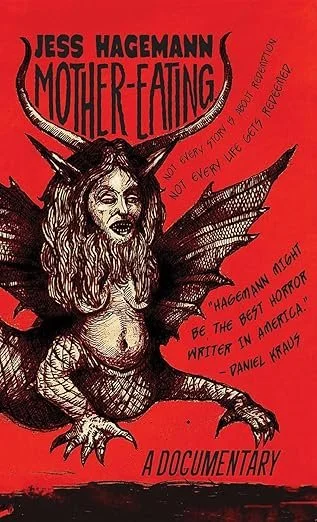
From the Author: A modern retelling of Marie Antoinette's reign as the queen of France, set in Austin, Texas. Instead of marrying her daughter off to King Louis, Resa Habsburg sells Mary Toni to a pseudo-religious torture-happy sex cult in exchange for a TV contract.

What Critics Are Saying: Mother-Eating gleefully penetrates and butchers all you thought was possible in fiction. It is a literary impalement. Perverted, shocking, and unprecedented. Jess Hagemann is one of the most singular and distinct voices I’ve encountered since first reading authors like William S. Burroughs and Georges Bataille. There is no literary equivalent to this raw, uncompromising masterpiece. It truly exists in its own superior class.”

—Eric LaRocca, author of Things Have Gotten Worse Since We Last Spoke

From a Reader: Mother-Eating is one of the most diabolical and unsettling retellings I have ever had the privilege to read. The documentary style the book is written in was utter perfection. I love me a good cult story. I was completely engrossed from start to finish.”

Amazon | Goodreads | Author Site

Success In the Press: Babe In the Woods by Jude Hopkins

Five stars from Readers' Favorite and Reader Views

Five stars from Readers' Favorite and Reader Views ★

From the Author: It's September 1995, the first year of the rest of Hadley Todd's life. After living in Los Angeles, Hadley returns to her hometown in rural New York to write and be near her father. In addition to looking after him and teaching high school malcontents, Hadley hopes to channel her recent L.A. heartbreak into a play about the last moment of a woman's innocence. But she seeks inspiration.

Enter Trey Harding, a young, handsome reporter who covers sports at the high school. Trey reminds Hadley of her L.A. ex and is the perfect spark to fire up her imagination. The fact that Trey is an aspiring rock star and she has L.A. record biz connections makes the alliance perfect. She dangles promises of music biz glory while watching his moves. But the surprising twist that transpires when the two of them go to Hollywood is not something Hadley prepared for.

gives food for thought to fans of romance, women’s fiction, and psychological drama [...] will also appeal to those who enjoy entertaining, character-driven morality tales.”
— Reader's Favorite

Our Take: With a dry wit and a sharply observant eye, Babe in the Woods captures the restless creative energy of a woman caught between reinvention and nostalgia. Hadley’s homecoming is anything but quiet—full of angsty teens, aging parents, and a maybe-muse who complicates everything. Hopkins balances literary introspection with page-turning momentum, letting the story surprise us as much as it surprises Hadley herself. This one’s for readers who love second acts, small towns with big feelings, and stories that ask what it means to come home changed.

From a Reader: “The writing is crisp, intelligent and keeps the reader captivated as we follow Hadley's life and the hurdles she faces”

Amazon | Goodreads | Author Site