
Historical Fiction Company's Award of Excellence
★
Bronze Award from Yarde Book Reviews
★
Historical Fiction Company's Award of Excellence ★ Bronze Award from Yarde Book Reviews ★
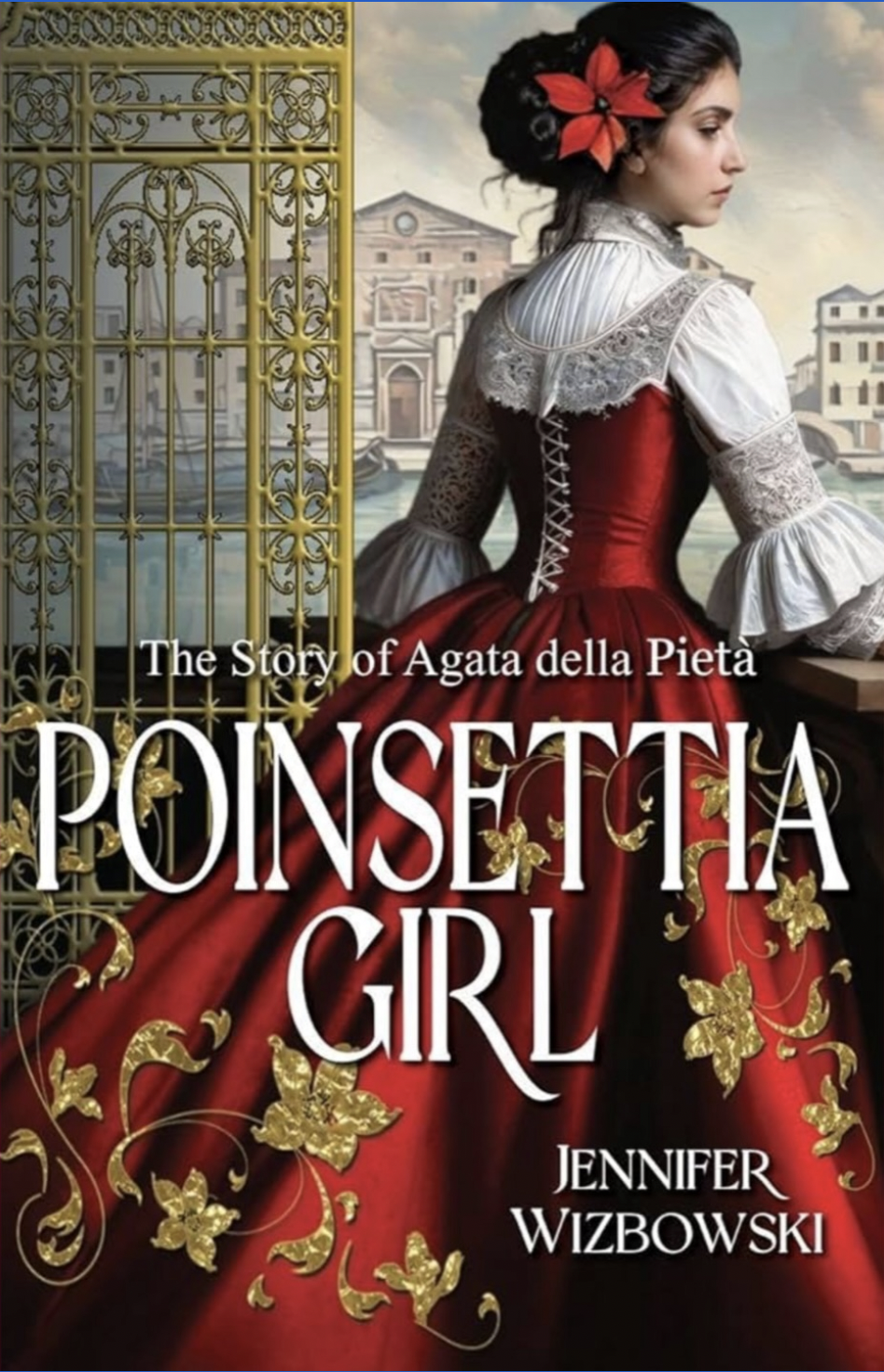
Poinsettia Girl is based on the story of Agata de la Pieta, an orphan musician of the Ospedale de la Pieta. Ten-year-old Agata's world is shaken at the sudden death of her mother. Left only with her egregious father, a working musician in Venice, her ailing grandmother sends her to the well-known orphanage, hidden from everything she's ever known. Agata auditions for the conservatory style music school where music is both salvation and spectacle. Hidden behind ornate metal grates, adorned with poinsettias in their hair, the singers are veiled in mystery, their ethereal music drawing noble audiences, including gilded young men who see them as treasures-not only for their sound but as coveted marriage prizes. Just as she reaches the height of her musical journey, a marriage proposal from someone outside the audience tempts her with the promise of a new life-a return to the old neighborhood she's longed for and a home she barely remembers. Torn between the music that has defined her and the hope of belonging to a family, Agata must confront the most profound question of her life: is her purpose rooted in the music that shaped her, or in the love that might free her?
“It is a book that lingers. It is a book that, once opened, seems to breathe. And it is, without hesitation, a book one should read.”
From BlueInk Review: “Through alternating character viewpoints and third-person narration, Wizbowski's novel thoughtfully explores the challenges of claiming autonomy as a woman in a traditional, male-dominated culture. Agata's steady transformation from a shy foundling to a 22-year-old musician illustrates how trauma can irrevocably shape personal identity. The writing shines when depicting Agata's growing artistry and how music serves as a source of inner strength. Overall, this is a quietly moving journey of rebuilding purpose after surviving personal tragedy. Readers who appreciate women's fiction will feel as protective of Agata as the fictional nuns charged with shepherding her into womanhood.”
From a Reader: “I found this story deeply moving and emotionally immersive. Agata’s inner conflict felt raw and authentic, especially her struggle between staying loyal to the music that saved her and the desire to belong to a family again. The author captures Venice with a soft, almost lyrical touch, and the atmosphere of the orphanage, the performances, and the social limitations placed on these girls felt vivid and heartbreaking. Knowing the story is rooted in real history added another layer of poignancy to every decision Agata faced.”