By Molly Pruetz
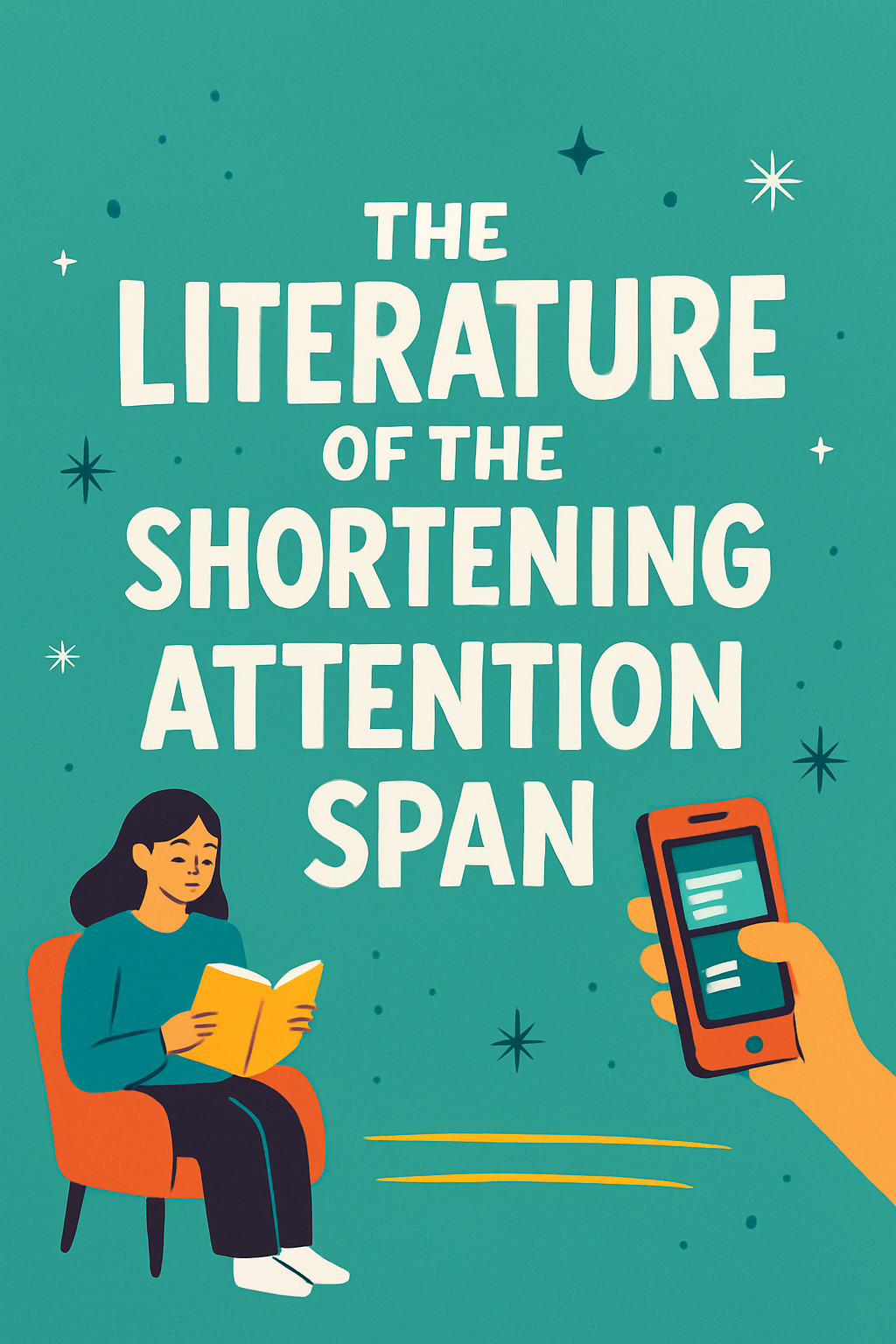
We live in an age where content competes for our attention in increasingly shortening bursts. In a digital world full of endless scrolling, how is the shortening attention span of readers changing what books are written, published, and read?
In a quiet moment after a long day, reaching for your phone feels so much easier than cracking open a book. Sometimes the last thing I want to do is string two sentences together (the trials of an English student, I suppose), but scrolling through endless short-form video content and social media often leaves my brain feeling like mush. So why not just pick up a book?
Maybe it’s because reading a whole page - even a whole paragraph, at times - feels overwhelming. It requires a skill that we are quickly learning to withhold: our attention. And, when we do have the long-awaited opportunity to pick up a book, we realize we have to work for the dopamine rush that our phones provide with no effort.
All day, our attention is fought for: by our jobs, our homes, our families, our pets…and our phones. We all know how the algorithms work, and we joke about them constantly. Whenever some niche content appears on our screen, chances are the comments will read along the lines of “idk how I ended up here, but I love it” or “the algorithm knows me better than I know myself.”
So, what does this have to do with our desire to read a book?
Simply put, technology (social media, specifically) in our culture has altered our mass reading habits. Are there still people out there who read multiple books weekly? Absolutely! I personally know several. Does it also seem a bit improbable that there is someone out there who finds the time to read multiple books a week? Absolutely.
And why is that?
Because the short form content we love so much is reconditioning our attention span. Nowadays, asking an audience to concentrate on one thing for multiple minutes at a time (forget hours) is a tall order. We’ve slowly conditioned ourselves to receive low-effort, fast-acting dopamine. All we have to do is sit and stare at our phone. (I know I’m guilty of it.)
Our attention span has adapted to a dopamine cycle of instant gratification that prioritizes speed over depth, and I think this has begun to reflect in our literature. Not just in how we read a book, but in what books we are picking off the shelves at Barnes & Noble.
In selecting a piece of fiction, there are two general categories: low-effort and high effort. I asked ChatGPT how it might define the conventions of both low and high effort fiction. Here is what it generated:
Low-effort fiction generally centers on -
Simple language (often verging on juvenile)
Plot/trope-based storytelling with instant gratification
Sex or trauma-forward marketing (‘emotionally devastating’ or ‘spicy’)
Fanfiction pacing and structure (alternating POVs, cliffhangers, emotionally unearned arcs)
Algorithm appeal (designed to hit niche markets via TikTok aesthetics (‘morally gray man,’ ‘feral girl energy,’ ‘he falls first’).
High effort fiction generally centers on -
Dense or complex prose (often more philosophically or emotionally loaded)
Thematic or philosophical weight (often no clear resolution, and ambiguity is intentional)
Formal Experimentation (structure is nonlinear or fragmented)
Slow or Ambiguous Plot (focus is often interiority, not action)
Intertexuality/literary References (expects you to recognize, or at least sense, echoes of philosophy, art history, mythology, or other literature)
Moral Ambiguity/psychological complexity (you’re not told what to think or feel about characters)
Platforms like TikTok and Youtube are saturated with content that reviews, summarizes, and recommends books (we don’t even have to blind guess anymore, we can just read Goodreads comments). Consumers buy those books. Sales go up. And suddenly, ‘low effort’ content is in the spotlight.
While both categories have their merits, there is one ruling difference: the amount of effort it requires of you—the reader—in order to engage with a text. Low-effort content is easier to read. It feels comforting and predictable because, chances are, you’ve read the same story (with slightly different characters or settings) a hundred times. It’s safe, it’s known, it’s relaxing. This also means it can get boring fast. On the other hand, high-effort content expects something of you. Whether that is pre-existing knowledge (bite the bullet, use a dictionary) or reading to the end of the chapter (I’m looking at you, Zadie Smith), high-effort content respects a reader’s intelligence. It demands reader accountability. It wants you to engage. And in a world where we are used to swiping up the moment we feel dissatisfied, it’s no wonder low-effort content is flying off the shelves.
There has always been a limitless range of subjects and genres to read from, but within the last 5-7 years, the literature market has seen high profitability from ‘low effort’ literature. Why is that? We’ve been through a lot in the last five years alone. We don’t want to dwell on heavy topics that require homework to understand. We want a real break from life. Something easy to pick up and put down, fast-paced, and something that keeps going (stability). We want a low-effort, easy-dopamine ‘pick-me-up,’ sound familiar? (See Sarah J. Maas, Emily Henry.)
Because here’s the larger problem: if we’re continuing to desire increasingly low-effort literature, what does this mean for literature in the long run? Where are the stories that will guide us, teach us, grow us? Storytelling is inseparable to the experience of being human. What happens when we don’t have the time of day for it anymore because we’re chasing a dopamine high?
Don’t get me wrong, I’m not saying there’s anything wrong with picking up a new ‘low-effort’ read, (sometimes that’s just what TikTok ordered), but I do think there is merit in taking on a challenge to read outside of your preferred genre. Even if it takes you forever, you’re feeding your brain by doing something different. Sample the buffet because you can, have fun with it!
So, whether you pick up a cozy fantasy, tumble headfirst through the Library of Babel, ask yourself: why am I reading this? Are you looking to be comforted, challenged, or distracted? (Trust me, the dopamine is sweeter when you earn it.) In a world where attention is our most valuable commodity, our literature is being reshaped by what we’re willing to spend it on. So, every so often, switch it up. There are so many stories out there waiting for you to give them a try.
You are the market, and there is power in what you buy, read, and share. If you want more of a certain kind of story—read it. Talk about it. Post about it. Be vocal. Literature can still stretch us, slow us down, make us think, and help us grow, both as individuals and as a community. But whether you’re reading something ‘low’ or ‘high’ effort, just keep reading!