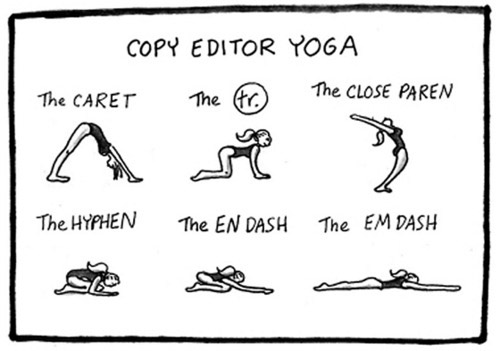
Creating characters, setting them off on great adventures and sending in villains to thwart them are the fun parts of writing. But as writers, our own villains are often those pesky commas, apostrophes, em dashes and more.
There are so many rules. And there are times when the rules are allowed to be broken. Grammar can make the most creative of us squirm and feel enclosed, trapped. But done well, proper grammar and spelling can set your story free.
That’s where good copy editing comes in.
A comma in the right place can make a big difference in meaning. For example, notice the difference between “Let’s eat Uncle Mark” and “Let’s eat, Uncle Mark.” Uncle Mark will be very grateful for that comma.
But using correct grammar doesn’t have to be clinical. It can be as much an art choice as a character’s decision. Used well, commas, periods and em dashes can change the pace and tone of a sentence, paragraph or scene, speeding it up for action or slowing it down to build anticipation.
Of course, proper grammar and spelling also helps the reader stay in the story. Every time a reader sees a spelling error or a missing period, it jerks the brain into remembering that these are words and this is a book — it’s not really the movie they’ve been experiencing in their mind. It pulls them back to the real world and away from the reality of the story, which is where you want your readers to stay.
Word and most other writing software have at least a spell check and maybe a grammar check too. These are useful tools, but their not fallible. A spell check won’t notice that the “their” in that last sentence should have been “they’re,” for example. And the grammar check won’t care whether Uncle Mark is dinner.
So, what to do? If grammar is your specialty, a good read-through paying close attention is a start. However, our brains are smart. They’re trained to fill in what’s missing. So you might have read “they’re not fallible” and not noticed the mistake until you read the next sentence. If you caught it, congratulations. But if you had written it, your brain would have remembered and most likely filled in what you meant to type instead of what you actually typed.
That’s is why it’s important to have others copy edit your work.
Having your manuscript edited is especially important for self-publishers. But it’s equally important for writers who are submitting to agents and editors. Sure they’ll forgive the occasional missing comma, dangling participle, or “that” instead of “which,” but too many errors, and you’ll have that reality check problem. When it’s your career on the line, and your manuscript is the last of 15 the agent or editor has read and it’s nearing midnight, you don’t want to give them any excuse to put it down.
Don’t let pesky grammar get in the way of your book deal. Call Yellow Bird Editors.