
Drafting

The Outline is Your Novel’s Life Preserver

download (1).jpeg

I wrote the ending of my WIP the other day. I finished the first draft of what will one day be a YA fantasy novel. It came in at about 57,000 words. After bragging on social media, I enjoyed the congratulatory comments and counted the ‘likes’ on Facebook while I finished the storm drain around the back of the house. It was a good day.

I met Joe O’Connell my first semester of grad school at St Ed’s. Joe teaches a great class with a modifiedNaNoWriMo format. It’s simple: if you do all the reading and exercises and take part in class, you get an ‘A.’ Oh, you also have to finish a 40,000 word novella rough draft. You know, while carrying the rest of that semester’s workload and, if you’re like me, holding down a job.

Early on, Joe insisted we make outlines. He didn’t insist we follow them, necessarily. He just wanted to make sure we had some kind of life preserver for when we found ourselves adrift in the middle of our stories.

Like many in the class, I scoffed. Obviously my teacher, despite having made his living as a writer for quite some time, was some sort of lesser being if he needed an outline. I bristled at the idea of hobbling my genius with anything as a base as forethought. But I also wanted an ‘A,’ so I half-assed something together.

Then I pretty much ignored that plan until the moment came, right smack-dab in the middle of my MS, when I found myself completely and utterly lost. Hmmm, I thought, maybe Joe was onto something with his zany theories. Desperate to get drafting again, I dug out my crappy outline. What I found there had little to do with what I had since written. But it did save me by reminding me of all my original, misplaced intentions.

I made it to the end and earned my ‘A.’ There was much rejoicing.

Then I read the thing.

Oh well.

At least I learned a lot about the process.

But that’s the past.

Last year I wrote a two part post on Blake Snyder’s Save the Cat. At that point, I was using Snyder’s three act structure manual as a map to create an outline for the draft I recently finished. (Snyder’s method can be applied to any writing genre, not just commercial films.)

Unlike during my grad school experience, I forced myself to make a strong outline that hit all the emotional beats my hero needed to hit. And I stuck to my plan. Don’t get me wrong, many of the specifics scenes I put into my outline didn’t make it to the page. But all the major points in my hero’s emotional arc landed where they needed to.

Pacing and plotting have always been my weaknesses. But keeping to my outline – and updating it as the storyline morphed – forced me to stay on emotional track even as the details of my story changed. It kept my plot rooted in my hero’s desires. And that translated into my most tightly paced and emotionally compelling work to date.

At least I hope it did. I’m forcing myself to wait as long as possible before reading it.

Then I’ll start making an outline for the second draft.
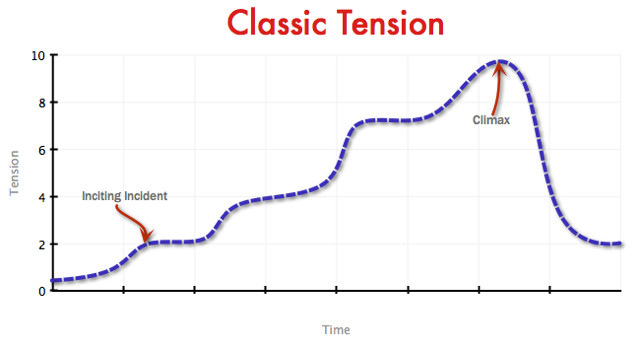
Avoiding Tension Drains

Graph from www.yahighway.com

Graph from www.yahighway.com

Why is raising the stakes of my WIP so hard to do? I have no problem recognizing low stakes choices when other writer’s make them. Ask anybody I edit for; I bet they’ll all say they’re sick of hearing me nag about getting to the conflict as quickly as possible.

So why do I have such trouble applying this to my writing? It finally dawned on me after more years than I care to admit that I’ve been going to ridiculous lengths to avoid even the lightest whiff of peril for my beloved heroes. Sometimes I’d pen entire chapters without ever endangering, much less challenging the protagonist. Even when I made outlines, mapping out each crisis in advance, I still filled my stories with easy (a.k.a. boring) solutions.

I fooled myself into thinking that if the writing was coming easily it must be good. I thought experiencing that autopilot feeling was desirable. I was so very wrong. All I was doing when I found myself in the ‘zone’ was letting my hero relax his way back onto the path of least resistance. Which is why my stories always ended up in the land that tension forgot.

But no more!

Now I stop anytime I find myself cruising along, fingers flying, and easily following my characters across the page. I force myself to take the time, right then, to honestly assess my work. And almost without fail, I find that new scene that just flowed so easily lacks conflict.

A corollary lesson I continue to teach myself is how to recognize what I call tension drains. These are those conflict-lacking scenes that act as holes for all the tension to drain out of my story. For example, one of my favorite tension drains is the mealtime scene. This one’s been tough for me to give up. I can really sink my teeth into writing a dinner conversation (stupid pun intended). Unfortunately, that usually means I go for pages without anything actually happening. It really is amazing all the tables in my stories haven’t collapsed under the weight of all the exposition I’ve laden them with.

But I’m getting better at catching myself before I waste all that time and effort writing all those boring scenes. Instead of sitting my hero down at a table to talk, I try to get him to make a poor choice, the stupider the better.

overloaded-picnic-table-free-clip-art.jpg

Grounding the conflict in the hero’s decisions, making stuff his or her fault, raises the stakes in a satisfying and organic way that keeps the plot believable and inevitable. A lot of times it also has the benefit of taking the story in a completely unexpected, moreinteresting direction. That’s why it’s the best way to raise a story’s stakes.

But sometimes it just doesn’t work out where I can make the hero his own worst enemy. Last time I ran into such a situation (My characters were in a car for a protracted road trip.) I had the cops shoot out my hero’s back tire. That jammed him up good and it also helped me establish my world a little better. Since the cops were already on his tail the bullet out of the blue didn’t come off as contrived. Most importantly, it added tension; it upped the stakes. And that’s really the bottom line in a rough draft.

I have one final point about tension drains: not only is reading a high stakes story more entertaining, it’s a lot more fun to write, as well.

Rebutting a Point David Jauss Didn’t Actually Make

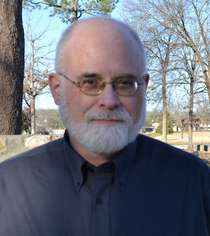
I recently learned that I’m a part of the herd in yet another depressing way. According to David Jauss, recent guest contributor on Brian Klems’s Writer’s Digest blog, my choice to write my WIP in the present tense is so “common place” it borders on cliché. Jauss’s post is an excerpt from his book On Writing Fiction. In it he makes the point that the present tense has become “the default choice for young writers.”

David Jauss

David Jauss

I’m certainly not claiming to be young, my beard’s almost as white as his, but I am an early career writer. As such, I’m always on the lookout for free and pertinent writing advice. So I didn’t delete that day’s WD email, “The Pros and Cons of Writing a Novel in Present Tense.”

By the way, kudos to Klems for crafting an effective subject line. It may seem uninspired at first glance. But it worked. It got me to read the post.

And that’s how I learned that a fundamental structural choice I had made for my debut novel is trite.

Or is it?

Jauss at least partly bases his conclusion on his experiences with his undergrad writing students. (And it’s only fair to admit that I’m probably being a bit harsh in my depiction of his views on verb tense. Sue me, I got defensive.) While he obviously views the “fad” of present tense writing as a bad thing – I’ll get to that in a bit – mostly he seems concerned with giving less experienced writers some tools to help them choose the right verb tense for their manuscripts. Choose being the operative word in the previous sentence. I applaud and support him 100% in that goal. I also thank him for sharing his list of Pros and Cons.

His post is worth reading, if for no other reason than Jauss’s (short) list of the limitations and advantages of the present tense. He doesn’t say anything new exactly – he is definitely aiming at a greener audience – but that’s part of his point. Which is the other reason his excerpt is such a good read. A well reasoned discussion of verb tense is long overdue. The quote he includes from one of his students really says it all: “Isn’t [present tense] the way fiction’s supposed to be written now?”

Jauss answers in the resounding negative, which is fine. Where I start to break with him is over what seems to be his assumption that the past tense is “the way fiction’s supposed to be written,” that its primacy has merely been usurped by a new trend. That writers need to return to the more venerated model.

How is that better? I hope his (alleged) implication is merely an accident of excerption. Otherwise, he’s simply advocating trading one thoughtless choice for another.

As his essay so nicely points out, both tenses have their advantages and disadvantages. Hopefully, he argues elsewhere in his book that there should never, ever be a default choice in any part of the fiction writing process. That every element of a well-crafted novel should contribute to the story, down to its tiniest word. Because that’s what the great writers do: they make thousands of great choices that result in great fiction. They weigh the pros and cons of each detail and never rely on any short-hand settings, no matter how time honored. Jauss tacitly cedes this point when he states that “the best writers almost always seem to know, either consciously or intuitively, when to use present tense.” Until I read his book I can only hope that this is the lesson he’s teaching his students and not that they should simply replace one lazy habit with another.

And now, mostly because I can’t help but be a smart ass (and because I’m still feeling a bit defensive), I want to offer a quick critique of the validity of his preference for the past tense. Isn’t its use the real cliché choice? After all, Professor Jauss himself calls it “a tense that has served authors since the very inception of fiction,” which is sort of the definition of trite. I’m just saying.

Ah, but I must tread carefully, lest I engage in a debate about an argument he actually made. And where’s the fun in that?

Instead I will simply conclude my rebuttal of the argument David Jauss did not make, confident of my rhetorical (and completely imagined) victory.

Testing Cunningham’s Thesis

In my February 5th post I wrote about an idea M. Allen Cunningham shared in the recent Poets and Writers inspiration issue. In his essay he explores turning “creative limitation” into a “positive force” and argues that “imposed limitation” stimulates creativity.

My day job recently forced me to put Cunningham’s thesis to the test.

This season, I’ve been crazy busy with my not-writing work – I’m a freelance theatrical stagehand. Most recently, an old friend who runs the scene shop down at Texas State called me for a gig, filling the last beautifully empty week in my calendar until the end of the season. I kind of wanted to kill him even as I said yes. It makes me feel a bit like an ass to complain about getting paying work. But feeling like an ass has never stopped me from blundering on before, so here goes. I despaired when I lost that week of free time. I didn’t realize how much I had been fetishizing it and draping it in (probably unrealistic) expectations in regard to my neglected WIP.

Then it was just gone. Once more, my ‘writing time’ had been superseded by my annoying need for food and shelter.

I’m proud to report that I eventually stopped feeling sorry for myself. Even more surprisingly, I rose to the challenge and set my alarm for four a.m. More surprising still, I actually managed to drag myself out of bed when it went off the next morning.

I wrote for two solid hours before “starting” my day.

2740366.jpg

I know, I know. There’s nothing new in a writer getting up insanely early to work. But it is new to me. And, even though it puts a deep ache in my lazy bone to say it, I have seen the light. Okay, not exactly the light; it’s still dark in those quiet hours. But I am now officially a believer in the get-up-before-the-rest-of-the-world-and-write strategy.

When I have to be.

Luckily, that only turns out to be about half the time. My paying work usually starts in the afternoon or evening, leaving me plenty of time for both sleep and writing. So it’s a comfortable commitment, one that fits easily into my long standing dedication to not working too hard if I don’t have to. But it is a new commitment that I am (so far mostly) keeping.

And I wrote some strong words in those predawn sessions. I also kept up on all three of my blog commitments. I couldn’t help feeling a little proud at the end of the week: I had been tested and not found wanting.

True confession time:

download (3).jpeg

Getting up that early sucked. And I only did it three out of the five days I worked my unusual eight-to-five schedule: on one morning I snoozed until 4:30, and on Thursday I didn’t get up and write before work at all. But I’m still calling it a good week, a personal victory on a small scale. A definite step in the right direction. And I can’t stress how happy I continue to be with the product of my early mornings.

If you’ve got a day job and you’re considering a predawn writing practice, I say go for it. You’ll be tired in the evenings at first, but it gets easier. If nothing else, when you tell people about it they’ll think you’re hardcore.

Next up for me is Ballet Austin’s New American Talent Contest at the Long Center. Their work calls start at 8:00 a.m. Mine will start at four.

YA Novelist Brian Yansky on Writing for Boys, Part 2

[Below is part two of my recent email interview with YA sci-fi novelist, Brian Yansky. Here’s a link to the interview’s first part. My conversation with Brian is part of a larger series on teen male aliteracy, all of which can be found on the Yellow Bird Blog.]

BPW: I recently read a great essay by author Matt de la Pena about how becoming an active reader can change a man’s life, young or old. In our emails leading up to this interview you mentioned how reading “saved you” when you were young. How so?

images (4).jpeg

BY: I didn’t start reading a lot until I was seventeen. Before that I was, to put it mildly, unfocused. I was close to flunking out of school. I knew the local police much too well, and they knew me.  But when I started reading and writing (I started writing a diary because of the reading), I found a different kind of excitement from the kind that had been getting me into so much trouble. Reading and writing became healthy obsessions. They gave me focus. They gave me hope.

BPW: Andy Sherrod describes some basic differences between boy books and girl books. These have to do with the personality of the hero, the types of and settings for conflicts the hero must face, the narrative voice, and the use of factual information in the story. Your most recent novel,Homicidal Aliens and Other Disappointments, fits pretty neatly into all of Sherrod’s defining characteristics for a boy book. How did you come to specialize in writing for a young, male audience? Did you make a conscious choice?

BY: Well, like a lot of YA writers, I thought my first book was for adults. I found an agent who thought so too and tried to sell it. Several publishing houses liked it, but it didn’t sell. Then my wife and [YA novelist]Cynthia Leitich-Smith both encouraged me to think of it as a YA novel. I revised it a little but not much. It sold, almost immediately, as a YA.

I love writing YA characters. That age has so many possibilities. There’s a freshness to the world and experience and at the same time a naivety in some instances. It’s also a time of great change. There’s school and friends and first love and a lot of firsts. It’s just an interesting time, ripe with dramatic possibilities. It comes down to this: I’m excited and thrilled by writing characters this age. You should write what excites and thrills you.

BPWHomicidal Aliens ends with a major victory for the protagonist but leaves one antagonist unaccounted for. Does this mean a third book is in the works? If so, can you give a little taste of what future annoyances readers can expect for Jesse? If not, what’s next on your writing horizon?

BY: My next novel is not a sequel. Alas, no more alien books.  My next novel is called UTOPIA, IOWA, and will come out in early 2015. I just finished the final edits with my editor. It’s about this character who sees ghosts, but this is not the big deal to him because everyone on his mother’s side of the family sees ghosts. However, it becomes a big deal when a girl in his school is murdered, and she starts insisting he find out who killed her. I hope my main character, a–surprise,surprise– seventeen-year-old male, has a strong and interesting voice.

[If Yansky’s past heroes are any indication, his newest protagonist will indeed have a unique and memorable voice. Many thanks to Brian Yansky for his great answers here and for all of his great books. Earlier in this series, I asked Andy Sherrod for his boy book top ten. So it only seemed fair to ask the same of Brian. Here are his boy book recommendations:]

download (8).jpeg

Chaos Walking by Patrick Ness
Unwind by Neil Shusterman
Godless by Pete Hautman
Looking for Alaska by John Green
The Great Green Heist by Varian Johnson (due out 2014)
The Absolutely True Diary of a Part-time Indian by Sherman Alexie
Cat’s Cradle by Kurt Vonnegut
The Bartimaeus Trilogy by Jonathan Stroud
His Dark Materials by Philip Pullman
The Book Thief by Markus Zusak

download (9).jpeg