
Editing

Don’t Give Me That Look! How to Improve the Emotional Cues in Your Manuscript

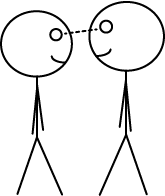
I’ve written blog posts about gesture before, but this particular one has been keeping me up at night! As I am about to embark on revisions for my upcoming novel (forthcoming in 2016), I keep thinking about how to capture the “looks” between two characters. It’s common to find “looks” within a manuscript. After all, how often does one character look or “gaze” at another in a moment of dramatic or even romantictension. Ooh La La!

I have a challenge for you, dear reader! Go to the story you’re working on, open the file, and do a word search. Find any incarnation of the word “look/looks/looking.”

Hurts, doesn’t it? YIKES.

In my WIP right now, I have 176 “looks.” I’m not sure how horrible that is as of yet because I’m still editing, but I know that I tend to overuse “looks” so I thought I would share some of my writing/revision process.

I keep wondering what it is that I hope to elicit from “a look” between characters. In cinema, we have the advantage of various zoomed in shots, savvy editing, camera angels, etc. On film, a look between two characters can say so much more than a line of dialogue ever could. Yet, in fiction, we have the hefty job of creating the cinematic experience in the mind of our readers. We need to create the camera angles and trigger an emotional response with our words.

We also need to ensure that a look will show us something about our characters and their world instead of just telling the readers that eyes are meeting. We can’t assume that the reader is going to understand what is being unsaid between two characters. It is up to us, the writers, to make the gaze mean more. As I revise and as you revise, I hope that these three tactics will help you make the most out of this kind of unspoken communication.

THREE WAYS TO MAKE “A LOOK” WORK HARDER (AKA I am trying to take my own advice):

1. Make sure that the look reveals something important/unknown about your character.

Who are the two people looking at one another? Why is the look important? If two characters make eye contact that doesn’t illuminate something about the characters or their relationship, then we don’t need it.

Now, I’m not saying that every single look in a manuscript has to carry weight. Generally, when you have two characters in a scene together and one looks at the other, you need to consider what is it you are trying to communicate. Here’s an example from my current WIP:

“Where are you going?” Mr. Hall says.

“You do what you want,” I say to Lila who meets my eyes and then quickly looks away. “Take the role. It’s yours. I don’t want any part of this.”

What I am trying to show there is that Lila is self-righteous. She’s hurt my character badly, but doesn’t want to make eye contact because she’s a jerk. Have I shown that? Nope. I need to make the moment work harder so that the reader understands Lila’s character through that shared gaze.

I don’t know if this is how I’ll ultimately end up revising but I could try something like this:

“Where are you going?” Mr. Hall says.

“You do what you want,” I say to Lila who snaps at her gum, eyes to her cell phone, and with a casual flip of her hand, tosses her hair over her shoulder. I’ve never hated the smell of bubble gum so much in my life. “Take the role,” I say to her smacking jaw. “It’s yours. I don’t want any part of this.”

I’ve added action, I’ve made Lila gesture differently, revealing her indifference and also employed sensory detail so that we know how my character feels about Lila’s behavior.

2. The “look”” needs to either be the focal point of the scene or it needs to push the plot forward in some way. Again, not every single “look” can matter but the ones that do should earn their place within the narrative.

Ask yourself: What can the look between your two characters change/reveal? If the answer is nothing, then think deeper and reveal the information between them in a new or varied away. This leads me to my last suggestion.

3. Deepen the gesture.  Is “looking” the only way that people interact with one another? No way!

Consider the emotional moment that is occurring between these two characters. Perhaps all of these “looks” are really a roadmap for you to go back and deepen the relationships between these two characters when you are ready to revise. As you draft, leave all the “looks” in as placeholders, but definitely go back.

When you do, ask yourself what other ways these two characters can interact? Sensory detail? Touch? Food? Action/Reaction? What is the look standing in for? What do your characters want to say?

Well, that’s it for me! I hope that I’ve illuminated some tactics to try to deepen the way your characters inhabit the pages of your story!

I wish I could go on and on about this! In fact, I probably could.

Literary Diversity Lesson in Southeast Asia

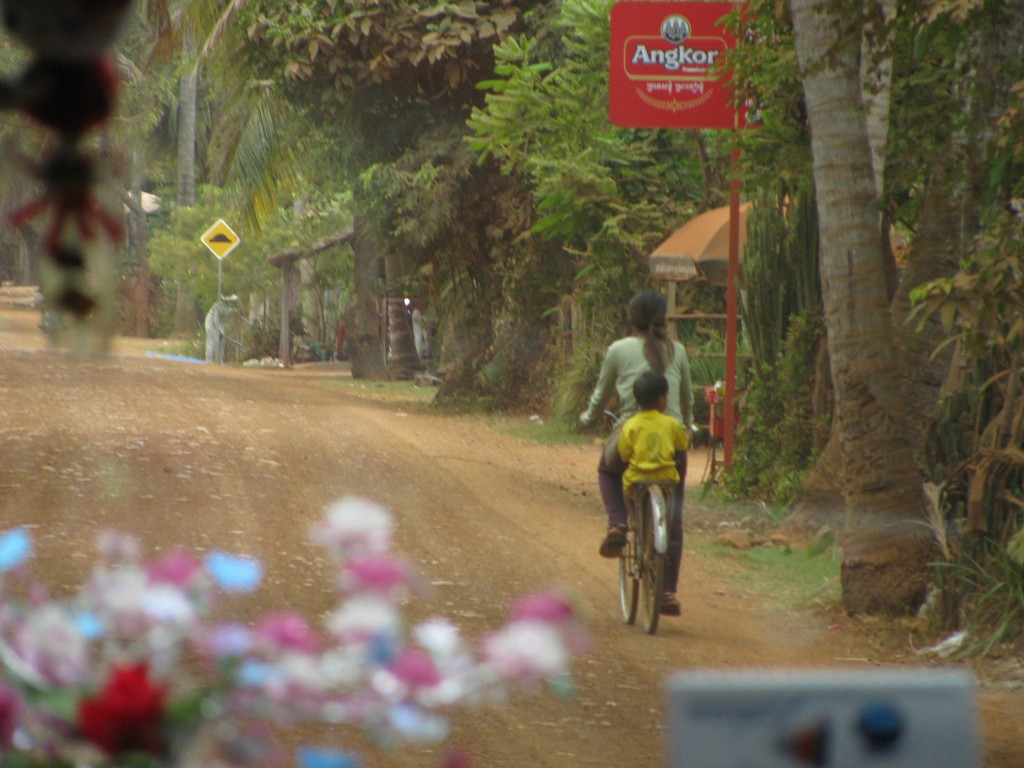
Sorry for the lack of a blog lately. I’ve beenon vacation in Southeast Asia. I’ve had much good food across three cultures; met many charming, generous, and educational people; fell for thirty-six hours to dysentery; and even got to feel – I mean really, really feel – first world guilt; all book-ended by two thirty-hour flight combos. I’ve been home three days now, and I’m still a little exhausted and exhilarated. As someone once said of traveling, I didn’t just gain a new perspective, I gained new eyes.

So I’m better able to look at that whole first world guilt thing with a little more perspective. And I’m also able to look at the other side–that distinctly American sense of pride that much of the world (rightly) considers arrogance–with a little less shame as well.

Don’t worry, I wont go into all that here. I mostly just wanted an excuse to post some pictures from and brag about my trip. And these issues of Western imperialism, past and present, actually tie into the subject of this post. At least they do in my brain.

That’s because I’m writing about literary diversity.

No, really.

I’ve been contemplating the lack of diversity in my manuscript. What will be my debut novel is the story of young white man who mostly interacts with older white men. Don’t worry, this is not a synopsis. But, mostly due to white guilt, I do feel compelled to mention that there are two major female characters, one of whom used to be a man. So my story’s not completely overridden with Y chromosomes. And, as has recently been pointed out to me, I don’t ever specify the ethnicity of my characters. They could be any ethnicity of Texan. Even still, I think it’s safe to assume that most readers will construct my characters with a certain WASPishness after they look at the headshot inside the back cover.

But, as I said, my WIP will be my first novel. Which is why I’ve decided I’m not going to push too hard to widen its gene pool, so to speak. I’m going to let it be about a white boy in a mostly white world. Whether I like it or not, I’m about as WASP as they come, so it makes sense that I should start my novel writing career with a WASPy cast of characters. I’m writing what I know and settling into my voice. I’m not worrying about exploring other, less comfortable points-of-view.

Yet.

That comes next.

And in the meantime, here’s a picture of a banyan tree eating a 6th century Hindu Wat: 


Mine Field and Gold Mine: Why You Should Read Your Primal Posts

Since my imagination seems to be in a bit of a dry patch when it comes to blogging these days, I decided to explore the wonderful world of reruns. The hope is to recycle some of my original posts that may have escaped general notice the first time around. Luckily (?), plenty of the Internet paid absolutely no attention to me for quite some time, so I’ve got a bumper crop of possibilities at my personal website. But my ongoing trip down blog-memory lane is not what this post is about. As often happens, my exploration in one direction led me some place unexpected.

Reading my first attempts at blogging reminded me of some wisdom I picked up somewhere, way back when, before I had a website (you know, a couple of years ago). Like most good advice, it was simple: the wise one said that all bloggers need to make a habit of reading their old posts and correcting/updating them as needed.

The wise one was right. I know this because, to date, I have completely and utterly failed to take the wise one’s advice. And my oldest posts reflect that. If you, like me, have gotten into the habit of publishing one of these things and then pretty much forgetting about it, then you, like me, might be surprised by what you find in the dustier corners of your archives.

It’s sometimes feels like a different person wrote them.

At first, I thought to share some of my choicest new-blogger gems here. But then it occurred to me that I would just be highlighting what is essentially mediocre writing worsened by bad editing. It occurred to me that might not be the wisest course of action for a freelance writer and editor to take. Though, if you hurry, you can still probably catch lots of the typos and bad grammar I haven’t gotten to yet. I am, after all, still the same procrastinating person I was before. And there are quite a few of those old posts. This process is definitely going to take some time.

But it’s proving beneficial on two fronts: I’m not only hiding my shame, I’m also discovering the various ways my writing has improved. (Yes, I like to think what you’re currently reading represents an improvement.) The biggest example of my writer-ly maturation has been seeing how my voice has matured.

So go back and read your primal blog posts, you might be glad you did. At the very least, you’ll probably catch a few of the typos you missed.

A Turkey Day Miracle!

I just wanted to share a little Turkey Day miracle I experienced this year.

I recently took on a ghost writing project. Obviously, I’m not free to go into any detail about it, but I was basically hired to help on a manuscript that had stalled out during revisions.

The author and I had been batting big ideas back and forth for several weeks with the goal of generating an outline. It was slow going and frustrating for both of us as we brought our very different perspectives to the project. But the slog finally paid off. Only — as is often the case with revisions and miracles — this pay-off ended up looking nothing like I expected.

On the Wednesday before Thanksgiving I finally emailed an outline to the author. But that wasn’t the miracle. No. The miracle occurred on the other end of the exchange. It seems the author had, totally unbeknownst to me, been busy rewriting his entire manuscript while we were discussing and (as far as I could tell) butting heads over some pretty major elements of his story. Soon after I was hired, I had suggested an idea for a substantial change I felt would solidify the hero’s character arc and give the reader a better empathetic focal point. We had agreed to implement this change, but we couldn’t seem to come together on how. And, with the holiday season fast approaching, I was running out of time. In addition to all the normal Yule-time crap, I still work backstage on Ballet Austin’s Nutcracker. So I tend to get very busy with non-writer things in December.

But, like I said, the author I’m working for had been furiously revising in response to our discussions. And he had taken his story in a whole new direction that simplified and clarified and generally turned the whole thing around. I found the fruits of his labors waiting in my inbox on the morning after Thanksgiving.

Nitpicking can be a good thing

Here’s where we get into the miracle. Which is, simply put, that this writer had not only fixed a lot of the problems with his story, he also reminded me why I love to edit. And, more importantly, he showed me the incredible power an editor has. Even if an editor doesn’t “get you,” even if an editor seems to do nothing but nitpick and ask annoying questions, he or she can still help because all those questions and comments will force you to look at your work in a new way. And those questions and comments – no matter how far off base they may feel – should force you to think about why you’ve made those choices. Even better, your editor’s nagging will make you figure out ways to fight for what you decide is important. And they’ll make you clarify the $64,000 question of why you wrote the thing in the first place.

Which is exactly what happened during my Turkey Day Miracle. The moral? It’s simple: take the time and effort (and risk) to find qualified people to react to your work while you’re working on it. And listen to them, especially when you don’t agree with what they’re saying. You’ll almost always be glad you did.

College Football and Revising: Who Knew They Had So Much in Common

Before getting to the blogpost proper, I have an invitation: come visit me October 25th or 26th at the Texas Book Festival!

I’ll be hanging out with E. Kristin Anderson in the Yellow Bird booth. Okay, we’re only in half a booth because we’re sharing with The Writing Barn. But that’s even more reason to stop by. Between Yellow Bird’s editors and the always amazing programming at The Writing Barn, you can probably find a lot of the help you’re looking for to get your WIP whipped into shape. And, as always, we’ll have candy while supplies last, not to mention coupons good toward the cost of future editing.

And the Free Query Letter Raffle is back on!

But you have enter in person at the Texas Book Festival. So stop by Saturday or Sunday, the 25th or 26th(this month). Bring all your questions about freelance editing and get a little sugar fix while you explore the festival.

This concludes the announcement portion of the post.

(Please don’t stop reading.)

I am a fan of UT football. Especially this season. I can’t remember ever being more proud of my alma mater’s football team than I have been this fall.

No. Seriously.

But they suck this year, you may be saying. And with a 2-4 record, you’d arguably be right. Unless you look more closely.

When I watch the Longhorn football team I can’t help thinking of the ways talented but immature writers have to struggle with themselves. Watching Coach Strong doggedly implement his ‘don’t be a dick’ policy with his players, regardless of the short-term cost, reminds me of my own ongoing — sometimes rocky — development as a writer.

I couldn’t help empathizing with UT last Saturday when they beat OU in almost every way except the final score. Their opening drive was a perfect example of what I mean. They ended up moving the ball down the field despite repeated self-sabotage (in this case, multiple stupid penalties) and somehow still managed to put points on the board. They kept showing flashes of brilliance, only to undercut themselves each time. Then they gave up a touchdown on the ensuing kickoff. And that’s pretty much how it went the rest of the day: 1. Sprint Ahead, 2. Shoot Own Foot, 3. Repeat ad nauseum.

Like a writer clinging to a scene or image that’s brilliant but just doesn’t fit his story, this Longhorn team clings to its former — let’s just call it traditional — superstar athlete mindset. But like a good editor – come on, you knew I was headed there, it’s an editors’ blog – Coach Strong keeps pointing them in what he sees as the right direction, insisting on a level of self-discipline and commitment a lot of his players obviously struggle with.

UT’s new coach has fired a lot of talented young stars. But like an editor confronted with that brilliant but not quite right scene, he knows that sometimes you just have to make the ruthless cut. Push delete and keep focused on the big picture. Get through that first season as best you can and build your program from there. I just hope he gets a chance to finish his revisions.

Because, unlike an editor working with a writer, the whole world’s watching Charlie Strong and the Longhorns go through their rewrite process. That’s got to be rough.

Oh, and Hook ‘Em!