
Irony: Misunderstood and Misused

I know it’s been said, but, as this is one of the most misused words I run into, it never hurts to go over it again:

According to my forty-year-old dictionary:

Irony IS the use of words to convey the opposite of their literal meaning. It can also refer to a situation, utterance, or literary style that is marked by such a contrast between expected and perceived meanings.

Then it gets a bit muddy, because the definitions of irony also include the incongruity between expectations and results, itself, as well as any circumstance notable for such an incongruity.

Irony Is Not a funny coincidence or an interesting paradox. And it’s not necessarily the same as sarcasm. Though sarcastic statements are often ironic.

For all of my fellow geeks out there who have shouted “Aha!” and curled your fingers into typing position to begin your rebuttal: I am deliberately leaving dramatic and Socratic irony out of this discussion. But, by all means, feel free to comment with your definitions of those two specialized definitions of irony.

Jonathan Swift

Jonathan Swift

One of the most famous examples of an ironic literary work isJonathan Swift‘s A Modest Proposal. If you haven’t read it then you’re missing out. Briefly, it’s a 1729 essay from an Irish writer/social commentator suggesting (ironically) that the best way to solve the problems of rampant Irish poverty and unemployment was for the upper class Irish to eat the infants of the Irish poor. Incidentally, he added that their soft skin would also “make admirable gloves for ladies, and summer boots for fine gentlemen.”

Gruesome but effective use of irony.

As Swift’s example teaches, irony rocks for pointing out the ridiculousness of a situation, even a really horrifying one.
Bob Harris

Bob Harris

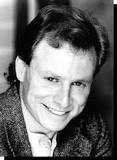
So what’s an example of the misuse of the term. Well, Alanis Morrisette‘s famous song “Ironic” is the most glaring contemporary one I can think of.  And, apparently Bob Harris agrees. In his2008 NY Times essay he sums it up beautifully, so I’ll just quote him:

Alanis Morissette

Alanis Morissette

“Alanis Morissette’s song “Ironic” is equally useful.If it rains on your wedding day, that’s a coincidence, not an irony. If you win the lottery and drop dead before claiming the money, it’s good luck followed by bad luck. If you meet the man of your dreams and then meet his beautiful wife, it’s a bummer. But if a song called “Ironic” contains no irony, is that in itself ironic? Nope.”

In closing, please forgive my pedantry, but, while it’s annoying to misuse the term irony in conversation, as Harris points out when he quotes the NY Times style guide, the “use of irony and ironically, to mean an incongruous turn of events, is trite. Not every coincidence, curiosity, oddity and paradox is an irony, even loosely.”

Remember, writing ironically is difficult and, again quoting the Times manual, “where irony does exist, sophisticated writing counts on the reader to recognize it.”

So, please, for the sake of pedants like me, make sure you actually are being ironic if that’s what you’re trying to do.


Writing Advice from Elmore Leonard

Elmore Leonard counts down his top ten writing tips.

Elmore Leonard counts down his top ten writing tips.

The fabulous Austin author, Lindsey Lane, brought this old NYT article to our attention, and it’s too good not to pass along. It’s a list of ten of Elmore Leonard’s rules for writing. Not surprisingly, he comes down pretty hard on adverbs and overwrought dialogue tags. But we had no idea he had such strong feelings about what Steinbeck called “hooptedoodle.” Take a look and let us know what you think!

Do You Do Online Writer Forums?

Since finishing up with school I’ve joined a few online writer forums. I won’t name them because I’m going to talk smack about them. For a long time I avoided any kind of online forum/open chat room, more because of suspicion than any direct negative experience. But I was conflicted, because I like the idea of a place where we people with a common interest can gather and talk about that mutual interest.

I finally forced myself to sign up for three, at random.

I don’t recommend doing it that way. As always, you should do your research.

One group I joined is very, very quiet.

The second is filled with one-on-one personal conversation: “Hey, how you doing? I’m fine. What you been up to?” There may be useful information being exchanged, but I gave up on sifting for it.

Some online writing forums seem to be dominated by alpha-dogs.

I must confess I’ve become a bit of a lurker on the third forum. I can’t help it. It’s fascinating. The group is dominated by an alpha who rules with ruthless authority. Someone asked the alpha-poster about his credentials once, implying he shouldn’t weigh in on matters he obviously knew nothing about. A protracted and super-defensive display of credentials ensued. The alpha-poster bombarded the upstart with post after post after post, listing the arguments for his expertise in the matter. I really thought he was going to post his entire CV.

The whole experience reminded me of a recent Writers’ League of Texas panel where zombie novelist Rhiannon Frater said that the heyday of the online forum has come and gone. And she should know; she started her authorial career in online forums. If I remember correctly, Frater felt all those kinds of useful discussion groups have moved to Twitter. So I guess I’m going to have to get over my old-man-fear of new things and explore the Tweet-verse next. If you’re like me and remain reluctant to immerse yourself too deeply in the waters of social media, I offer you the argument Chuck Sambuchinomade during a small group session at the last Writers’ League of Texas Agents and Editor’s Conference (Sambuchino runs the Guide to Literary Agents blog, among other things). To paraphrase, he said Facebook and Twitter (and all social media, really) have replaced the world’s newspapers.

Chuck Sambuchino

Chuck Sambuchino

Whether that thought terrifies you or brings you joy, I think Sambuchino’s right. Social media platforms, in all their ever shifting shapes, are where more and more of the book buying population go for their current events. If you want to make a living as a writer (whatever that means to you), you have to have an online platform. You have to learn aboutGoogle Analytics. You have to write online with SEOs in mind.

And you have to engage your readers where you find them. There’s just too much going on all the time for you to reasonably expect an audience to come to a you.

As Rhiannon Frater advised the WLT Third Thursday audience member who said he didn’t have the time to “waste” participating in the online world: “Don’t try to sell books, then.”

What Makes it True?

Just got back from following a link that the folks at Hunger Mountainposted on Facebook. It’s a post from Patrick Ross‘ blog called “What Drives Some Memoirists from Truth to Fiction.” In it Ross explores the gray area between truth and truthiness. He touches on the contradictory pressures of telling a good story in the best possible way and the ethics of recreating an incident as accurately as possible.

Perhaps most useful are the three rules he advises the memoirist to follow when navigating the treacherous terrain of a personal story that might be painful to relate:

1. Believe in your story.

2. Rely on your writing to maximize its impact rather than exaggeration.

3. Write not out of revenge but out of love.

Learning to Trust the Unreliable Narrator

Ken Webster as Thom Pain

Ken Webster as Thom Pain

I saw a one man theater piece last night at Hyde Park Theater called Thom Pain, Based On Nothing.

Full disclosure: I’ve been a Ken Webster fan for years, and we used to work together pretty regularly.

I know playwriting is not a typical Yellow Bird topic. But I woke up today with this play still living in my head. Specifically, it left me with a really big question that I felt I needed to answer. How does one successfully write a story using an unreliable narrator?

I’m usually not much of a fan of the unreliable narrator. And, before last night I would have told you that it has no place in live theater. But I’m here to tell you this morning that I was wrong. Ken Webster’s interpretation of Will Eno’s script is a must see proof of just how wrong I was. You’ve got one more week to see what I’m talking about, but it’s selling out fast.

Don’t fret, I’m not reviewing the play. It just left me with my question about that pesky, often annoying device known as the unreliable narrator. I have a hard time empathizing with a story teller who I don’t trust. Such a device can be fun at first. It can add tension by forcing the reader (or audience) to parse the information the narrator is giving and decide what to believe or not. But that kind of exercise quickly gets old and descends into the realm of the gimmicky.

So what was it about the play I saw last night that kept that from happening? As a writer, I needed to figure out what Eno did differently when he created Thom Pain.

The Albertine Notes is part of this collection

The Albertine Notes is part of this collection

The last unreliable narrator I remember was in Rick Moody’s novellaThe Albertine Notes. The plot of that story demands an unreliable narrator: it’s the story of a guy under the influence of a drug that alters not only his consciousness but general human history, as well. Even given those imperatives, my growing distrust for the narrator was confusing and off putting. Though, I must admit I’m glad I finished it. The story does have enough a payoff at the end to make it a worthwhile read.

So, what is it that makes an unreliable narrator palatable? I think it’s as simple as empathy. It’s that age old story telling truism. If you don’t care about the hero, then you don’t care about the story. And, somehow, despite all of Thom Pain’s attempts to push me away last night, I found myself caring about his struggles. His life – his twisted path to happiness – mattered to me. So I stood up and clapped at the end. And this morning I woke up with that character’s words still bouncing around in my head.

I’ll close with a telling moment from last night. After a particularly well written and delivered line, I heard someone sitting behind me whisper, “What a great line.” And it was, Thom Pain had just said, “I disappeared into her. And she, not knowing where I went…, left.” The narrative took on a universal dimension in that moment. All humans can relate to that feeling of being so in love with another person that you lose yourself. Just as all humans can relate to the fear inherent in such a letting go of the self.

I guess that’s what makes an unreliable narrator work: He or she speaks just enough important truth to make the audience stay with them through the preponderance of their lies.