
#FearOfTwitter

images.png

Twitter has made me into a cyber Jekyll and Hyde. And, like Stevenson‘s character(s), I really only have my own self to blame. On the one hand I love the idea of tweeting about the random occurrences and/or minor (hopefully one day major) accomplishments that make up my life. To paraphrase Tom Bodett, I am often my own favorite writing topic. But, on the other hand, I have this visceral aversion to what feels like airing my laundry in public. Even when it’s relatively clean. Like many writers I am both shy and desperate for attention. Like Jekyll and Hyde, I am a man divided by my own deepest yearnings.

As a writer and editor who would like to eventually stop being a stagehand, I know it helps my novel selling chances to at least have the foundations of an online platform already in place. I’ve even overcome my Luddite leanings enough to embrace Facebook, which I’ve come to enjoy.

Unfortunately, I can’t say the same thing about Twitter, which I suck at. I opened a Twitter account (@bpwilsonlit) a while ago but haven’t really done much with it. It’s not that I actively avoid tweeting or reading my feed; it’s just that I tend to forget about its existence. So most of my days go by without a single tweet or retweet or favorite from me. Worse, when I do end up tweeting it’s only ever to promote a blog post or book review. In other words I break one of the fundamental rules of social media by only interacting with my Twitter followers when I want something from them.

Starting today I am resolved to change that. I am going to force myself to tweet at least once a day about something that has nothing to do with my writing/editing career. Right now that probably means I’ll be tweeting pictures of my ongoing front yard terraforming project (#CompletedStoneSteps). If you’re more internet savvy than me you’re probably thinking I might be better off with a Pinterest orInstagram account since I like to share pictures. And you’d be right, except I’m already on Twitter. So cleaning up the mess I’ve made there seems like a better use of my time. Besides, I feel that my demonstrated social media ineptitude dictates a slow online expansion. Let me get me my ‘Twitter legs’ first, then I’ll move on to whatever’s no longer the hot new social media trend.

How’s that for a sales pitch? Irresistibly pathetic? Then feel free to follow me @bpwilsonlit.

Curiosity as Networking Strategy

Networking.jpg

Networking. If you’re like me, you hate the word, possibly even fear it. If you’re like me, you can’t help but feel a little skeevy when you try to do it. If you’re like me, you’re looking at networking all wrong.

I can say this with the utmost confidence because I am an expert. I have spent the last several years sucking at the art of working a room. You may have seen me at a recent Austin SCBWI or Writers’ League event, not that you’d recall. You were probably paying attention to one of the many Central Texas writers and illustrators who don’t suck at networking.

Believe me, I was too. Which is why you’d think I’d have realized something sooner: I underwhelm because I have been going into potential networking situations only thinking about what I want. Of course I feel manipulative when I try to connect with a new person on those terms.

Unfortunately (for me, anyway), I’ve started to withdraw from networking situations. Instead of enjoying getting to know all of the interesting people I see at writer conclaves, I hang back. Worse, I’ve started to sneak out early or find a reason not to attend at all.

But I’ve got a feeling that’s about to change.

A recent confluence of events has convinced me to try and alter my wildly unsuccessful networking model. First, I read a great article on networking in the Poets & Writers March/April issue. P&W contributor Brian Gresko not only did a nice job of delving into why so many writers consider networking “icky,” he helped me start to reframe my entire view of it. Read the article, aptly titled “The Art of Networking: How to Get What You Need Without Selling Your Soul,” for yourself. You’ll see how he likens networking to the regular day-to-day interactions of coworkers. His basic point is that writers rely upon the good will and support of their fellow lit professionals just like any other group of colleagues. Just because we don’t share a physical work space, doesn’t mean we don’t need each other to succeed.

The second serendipitous event grew out of Gresko’s article when I mentioned it to my partner.

She’s not a writer, but she makes her living freelancing in several fields. And she’s great at networking. We talked about why.

depositphotos_6850526_l1.jpg

Basically it’s because she goes into those hotel meeting rooms (or restaurants, or bars, or wherever) with curiosity as her agenda. Instead of entering the conversation with her needs hanging like a conference badge around her neck, she asks questions to get people talking about the things that interest them. She doesn’t worry if they go ‘off topic.’ At the very least, she and her new acquaintance part with pleasant impressions of one another. No pressure, just a friendly conversation.

Often though, my partner’s curiosity will highlight an opportunity to help that person in some small way. Maybe she knows someone her new acquaintance wants to meet. Or maybe it’s as simple as recommending a good off-the-beaten-path barbecue joint. Whatever. If she can find a way to do some little, unsolicited favor for her new connection then she’s started a relationship with them. And that’s the whole point of networking, right?

Speaking from my own awkward experiences, I see now that my few good networking interactions have occurred when I accidentally followed my partner’s example.

Which is why I am resolved to do it on purpose next time.

So look out if you’re going to the upcoming Writers’ League of Texas conference, I just might ask you what you’re working on.

Avoiding Tension Drains

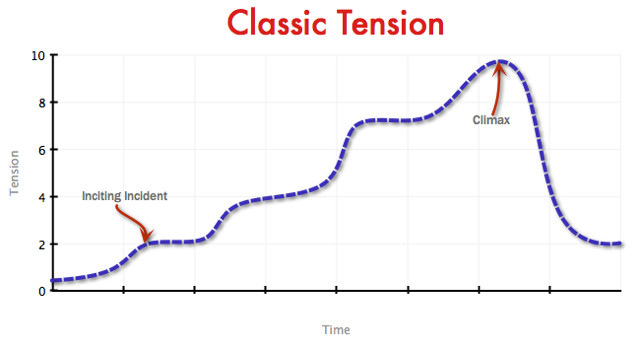
Graph from www.yahighway.com

Graph from www.yahighway.com

Why is raising the stakes of my WIP so hard to do? I have no problem recognizing low stakes choices when other writer’s make them. Ask anybody I edit for; I bet they’ll all say they’re sick of hearing me nag about getting to the conflict as quickly as possible.

So why do I have such trouble applying this to my writing? It finally dawned on me after more years than I care to admit that I’ve been going to ridiculous lengths to avoid even the lightest whiff of peril for my beloved heroes. Sometimes I’d pen entire chapters without ever endangering, much less challenging the protagonist. Even when I made outlines, mapping out each crisis in advance, I still filled my stories with easy (a.k.a. boring) solutions.

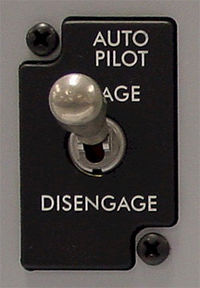
I fooled myself into thinking that if the writing was coming easily it must be good. I thought experiencing that autopilot feeling was desirable. I was so very wrong. All I was doing when I found myself in the ‘zone’ was letting my hero relax his way back onto the path of least resistance. Which is why my stories always ended up in the land that tension forgot.

But no more!

Now I stop anytime I find myself cruising along, fingers flying, and easily following my characters across the page. I force myself to take the time, right then, to honestly assess my work. And almost without fail, I find that new scene that just flowed so easily lacks conflict.

A corollary lesson I continue to teach myself is how to recognize what I call tension drains. These are those conflict-lacking scenes that act as holes for all the tension to drain out of my story. For example, one of my favorite tension drains is the mealtime scene. This one’s been tough for me to give up. I can really sink my teeth into writing a dinner conversation (stupid pun intended). Unfortunately, that usually means I go for pages without anything actually happening. It really is amazing all the tables in my stories haven’t collapsed under the weight of all the exposition I’ve laden them with.

But I’m getting better at catching myself before I waste all that time and effort writing all those boring scenes. Instead of sitting my hero down at a table to talk, I try to get him to make a poor choice, the stupider the better.

overloaded-picnic-table-free-clip-art.jpg

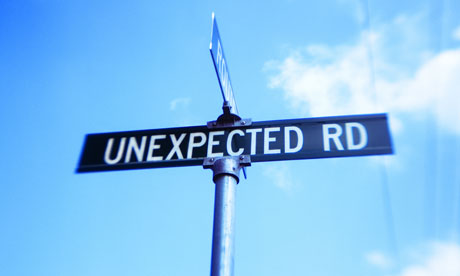
Grounding the conflict in the hero’s decisions, making stuff his or her fault, raises the stakes in a satisfying and organic way that keeps the plot believable and inevitable. A lot of times it also has the benefit of taking the story in a completely unexpected, moreinteresting direction. That’s why it’s the best way to raise a story’s stakes.

But sometimes it just doesn’t work out where I can make the hero his own worst enemy. Last time I ran into such a situation (My characters were in a car for a protracted road trip.) I had the cops shoot out my hero’s back tire. That jammed him up good and it also helped me establish my world a little better. Since the cops were already on his tail the bullet out of the blue didn’t come off as contrived. Most importantly, it added tension; it upped the stakes. And that’s really the bottom line in a rough draft.

I have one final point about tension drains: not only is reading a high stakes story more entertaining, it’s a lot more fun to write, as well.

What’s Wrong With Game of Thrones

I recently completed an editing gig where I needed an example of why writing a fantasy in a shifting limited 3rd person POV can be risky. Coincidentally, I had also just finished watching the third season of the TV show Game of Thrones.

I’ve tried to like the show, I really have. Just like I’ve tried to like George R.R. Martin’sSong of Ice and Fire novels. I even paid full hardback price for the fifth book. Now that I think about it, the thought of that $35.00 I’ll never get back may have contributed to why I found it so underwhelming. Or maybe I’m just old fashioned. Because I believe it takes a great hero to make a great fantasy adventure.

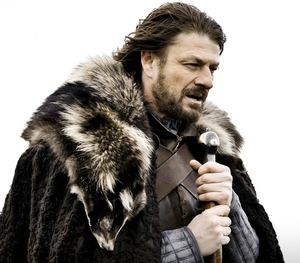
Don’t get me wrong, Eddard Stark, Lord of Winterfell, is an incredibly empathetic hero, complex and conflicted, noble yet accessible; he has it all. At least he did until Martin beheaded him. Ever since that moment near the end of the first book, the story has just limped along, sprawling further and further out of focus.

I’ve slogged through the whole thing, so I can tell you Martin trots out lots of candidates who vie to replace Stark, but none of them ever manage to seize the mantle of hero and give the reader a character to root for, a focal point. In other words, there’s no one in the story for me to care about.

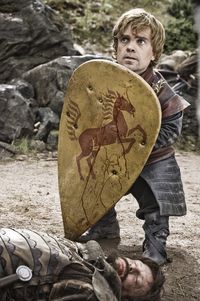
Okay, maybe that’s overstating it. Westeros is peopled with plenty of interesting and sympathetic characters. Tyrion Lannister rocks. For a long time I held out hope that he would step forward as the saga’s new protagonist. Even his brother Jaime started to get sympathetic after his maiming. But Martin refused to center his story on either of them. Instead he just dragged me along, meandering from viewpoint character to viewpoint character until I just gave up trying to figure out whom to root for.

Judging from the popularity of the novels and the show, I’m guessing I’m the only person in the world who feels this way. Oh well. I still think I’m right. And I still used George R. R. Not-Tolkien’s saga as my example for how a shifting limited 3rd person POV can fracture an otherwise fascinating story until it reads like a poorly structured history book. (And I enjoy a good history book.) So, thank you, Mr. Martin for unintentionally providing me with a useful editorial tool.

Oh, in case you’re wondering, yes, I will probably get suckered into reading the next book. That’s assuming Martin ever publishes it; like winter, he keeps saying it’s coming… But I seriously doubt I’ll spendany money on it.

Thank the Seven for libraries.

Rebutting a Point David Jauss Didn’t Actually Make

I recently learned that I’m a part of the herd in yet another depressing way. According to David Jauss, recent guest contributor on Brian Klems’s Writer’s Digest blog, my choice to write my WIP in the present tense is so “common place” it borders on cliché. Jauss’s post is an excerpt from his book On Writing Fiction. In it he makes the point that the present tense has become “the default choice for young writers.”

David Jauss

David Jauss

I’m certainly not claiming to be young, my beard’s almost as white as his, but I am an early career writer. As such, I’m always on the lookout for free and pertinent writing advice. So I didn’t delete that day’s WD email, “The Pros and Cons of Writing a Novel in Present Tense.”

By the way, kudos to Klems for crafting an effective subject line. It may seem uninspired at first glance. But it worked. It got me to read the post.

And that’s how I learned that a fundamental structural choice I had made for my debut novel is trite.

Or is it?

Jauss at least partly bases his conclusion on his experiences with his undergrad writing students. (And it’s only fair to admit that I’m probably being a bit harsh in my depiction of his views on verb tense. Sue me, I got defensive.) While he obviously views the “fad” of present tense writing as a bad thing – I’ll get to that in a bit – mostly he seems concerned with giving less experienced writers some tools to help them choose the right verb tense for their manuscripts. Choose being the operative word in the previous sentence. I applaud and support him 100% in that goal. I also thank him for sharing his list of Pros and Cons.

His post is worth reading, if for no other reason than Jauss’s (short) list of the limitations and advantages of the present tense. He doesn’t say anything new exactly – he is definitely aiming at a greener audience – but that’s part of his point. Which is the other reason his excerpt is such a good read. A well reasoned discussion of verb tense is long overdue. The quote he includes from one of his students really says it all: “Isn’t [present tense] the way fiction’s supposed to be written now?”

Jauss answers in the resounding negative, which is fine. Where I start to break with him is over what seems to be his assumption that the past tense is “the way fiction’s supposed to be written,” that its primacy has merely been usurped by a new trend. That writers need to return to the more venerated model.

How is that better? I hope his (alleged) implication is merely an accident of excerption. Otherwise, he’s simply advocating trading one thoughtless choice for another.

As his essay so nicely points out, both tenses have their advantages and disadvantages. Hopefully, he argues elsewhere in his book that there should never, ever be a default choice in any part of the fiction writing process. That every element of a well-crafted novel should contribute to the story, down to its tiniest word. Because that’s what the great writers do: they make thousands of great choices that result in great fiction. They weigh the pros and cons of each detail and never rely on any short-hand settings, no matter how time honored. Jauss tacitly cedes this point when he states that “the best writers almost always seem to know, either consciously or intuitively, when to use present tense.” Until I read his book I can only hope that this is the lesson he’s teaching his students and not that they should simply replace one lazy habit with another.

And now, mostly because I can’t help but be a smart ass (and because I’m still feeling a bit defensive), I want to offer a quick critique of the validity of his preference for the past tense. Isn’t its use the real cliché choice? After all, Professor Jauss himself calls it “a tense that has served authors since the very inception of fiction,” which is sort of the definition of trite. I’m just saying.

Ah, but I must tread carefully, lest I engage in a debate about an argument he actually made. And where’s the fun in that?

Instead I will simply conclude my rebuttal of the argument David Jauss did not make, confident of my rhetorical (and completely imagined) victory.